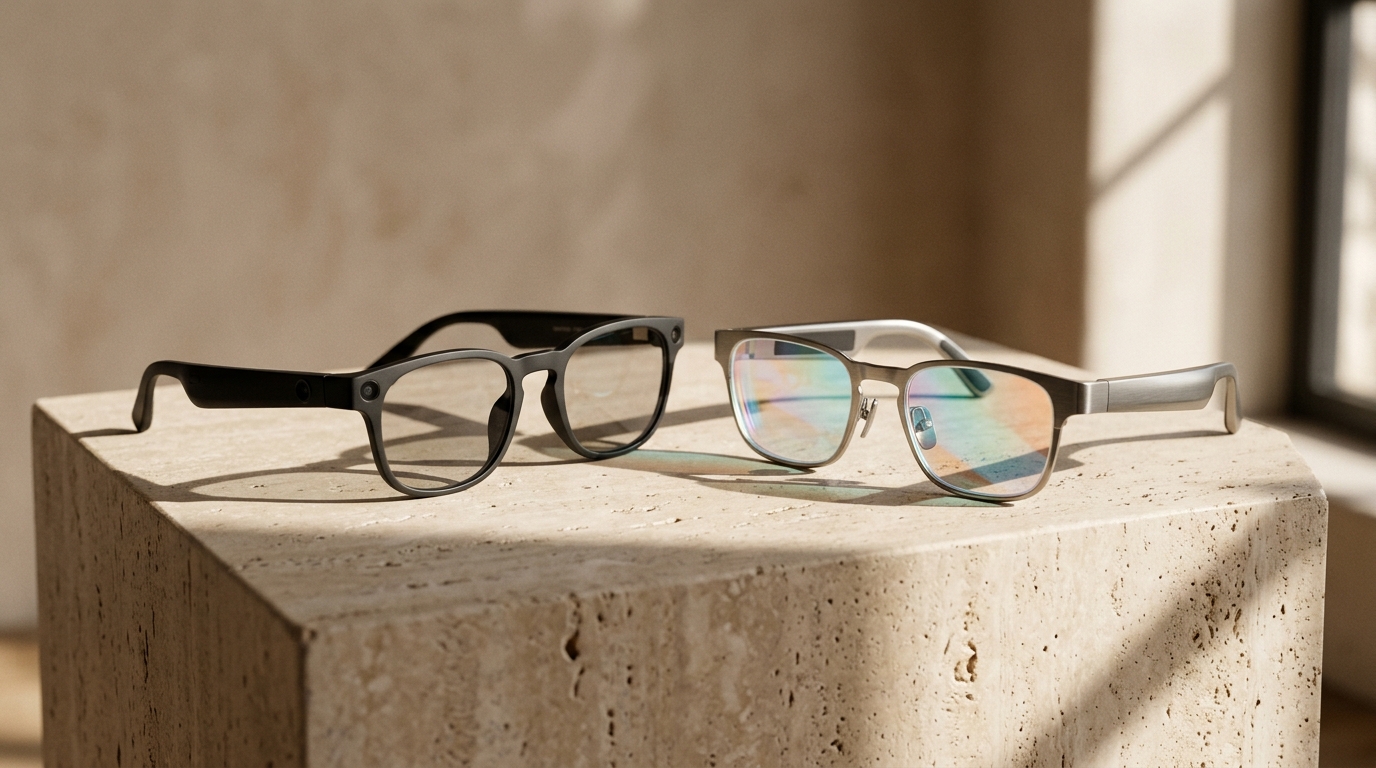
Audio-camera AI smart glasses vs tethered micro-OLED AR display glasses compared for weight, prescription lenses, flights, and daily comfort.
In this article
Smart eyewear has finally crossed the threshold from awkward science-fair prototypes into genuinely useful daily gear—yet online product listings still create massive confusion by lumping two completely different inventions under the same label.
In 2026, buyers face a clean fork in the road: All-Day AI Audio-Camera Glasses (built to replace your everyday sunglasses or prescription frames) versus Tethered Micro-OLED AR Display Glasses (built to replace a portable travel monitor or hotel-room TV). Understanding what each form factor excels at—and where physics still draws hard limits—prevents an expensive impulse return.
Side-by-Side Comparison: AI Glasses vs AR Display Glasses
| Model / Option | Best For | Key Verified Specs | Typical Price Range | Key Trade-off | Check Price |
|---|---|---|---|---|---|
| AI Audio-Camera Glasses | Walks, parenting/travel POV clips, cycling & hands-free calls | 45–50g everyday frame weightDirectional open-ear speakers + 12MP POV camera4–6 hrs active battery + pocket charging case | $249 – $379 | + Indistinguishable from classic eyewear in publicEffortless hands-free POV photos, voice AI & walking podcasts − Zero visual screen or HUD inside the lenses | Check on Amazon |
| Micro-OLED AR Display Glasses | Flights, hotel-room coding, Steam Deck gaming & bedroom cinema | 72–78g with dual 1080p 120Hz Sony Micro-OLED panelsElectrochromic dimming lenses for bright cabinsUSB-C DisplayPort powered by phone, console, or laptop | $399 – $499 | + Projects a razor-sharp 120–135 inch private virtual screenNo onboard battery to charge or degrade over time − Requires a thin USB-C tether cable and magnetic Rx lens insert | Check on Amazon |
Weight, Comfort & Social Acceptance: Why 25 Grams Changes Everything
Your nose bridge is surprisingly sensitive to weight. Standard acetate eyeglasses weigh 25 to 35 grams. AI audio-camera glasses hover around 48 grams—close enough to normal sunglasses that you forget you are wearing them during a three-hour city walk. They also keep transparent lenses with zero bulky optical prism stack jutting off your brow.
Micro-OLED AR display glasses sit between 72 and 78 grams and use thicker birdbath optical lenses to bounce crisp 1080p OLED light into your eyes. They feel totally comfortable while reclined in an airplane seat or leaning back on a sofa for a two-hour film, but nobody wants to wear them while grocery shopping or walking a dog.
Real-World Scenarios: Where Each Form Factor Shines
When AI Smart Glasses Feel Like Magic
- Hands-free parenting & travel memories: Capturing a quick 1080p POV clip of cooking, cycling, or playing with kids without holding a glowing phone between your eyes and the moment.
- Open-ear awareness on walks: Listening to audiobooks, navigation turns, and phone calls while still hearing approaching bicycles, traffic, and café baristas clearly.
- Instant multimodal AI queries: Looking at a foreign street sign, menu, or museum plaque and asking for a quick spoken translation or context summary without unlocking your phone.
When Micro-OLED AR Display Glasses Pay for Themselves
- Economy-class flights: Instead of craning your neck down toward a 13-inch tray-table laptop or squinting at a scratched seatback screen, you lean your head back against the headrest and float a private 130-inch OLED screen straight ahead.
- Privacy in public spaces: Working on confidential spreadsheets or client decks in an airport lounge—nobody sitting beside you can read a single pixel on your screen.
- Handheld gaming nirvana: Plugging straight into a Steam Deck, ROG Ally, or Nintendo Switch (via adapter) turns a cramped 7-inch handheld into a vivid 120Hz personal theatre.
Prescription Lens Costs & Hidden Accessories
Always budget for your eyesight before comparing sticker prices:
- AI Smart Glasses: Expect to add $80 to $180 for custom prescription or photochromic transition lenses (which automatically darken outdoors and turn clear indoors so you can wear one pair all day).
- AR Display Glasses: Many models include built-in myopia diopter dials (up to -5.0D on models like Viture Pro) so nearsighted users without astigmatism need zero extra lenses. If you have astigmatism, magnetic clip-in Rx inserts cost roughly $50 to $80.
✓ What We Like (Pros)
- AI glasses blend seamlessly into everyday wardrobes while replacing earbuds for casual walks and quick POV clips
- AR display glasses deliver true private OLED cinema and neck-friendly travel productivity in a pocketable case
- Both categories have matured in 2026 with better microphones, electrochromic tinting, and cleaner companion apps
✕ What to Watch Out For (Cons)
- Neither category yet combines featherweight all-day frames with a full high-resolution cinema display
- Battery life on AI camera glasses still requires midday case top-ups if you stream audio continuously
Final Verdict: Which Pair Belongs in Your Bag?
- Buy AI Smart Glasses (Ray-Ban Meta Gen 2) if you want stylish everyday eyewear that keeps your phone in your pocket on walks, bike rides, and family trips.
- Buy Micro-OLED AR Display Glasses (XREAL or Viture Pro) if you fly often, commute by train, play handheld consoles, or crave a giant private screen in a small apartment without mounting a TV.
Frequently Asked Questions
Can I put my regular prescription lenses into smart glasses?
Yes. Everyday AI audio-camera frames accept custom single-vision or progressive prescription lenses directly in the frame through optical retailers, whereas micro-OLED AR display glasses use magnetic clip-in prescription inserts behind the prisms.
Do AR display glasses work without plugging into a phone or laptop?
Most lightweight micro-OLED display glasses draw power and DisplayPort video over a thin USB-C cable from your phone, handheld console, or laptop, keeping the glasses under 78 grams with zero battery anxiety.
Are open-ear speakers on smart glasses audible to people sitting next to you?
At 50% to 60% volume in an office or café, directional open-ear drivers keep podcasts and phone calls private. Above 80% in a dead-quiet elevator, someone standing right next to you will hear faint audio leakage.
How long does the battery last on AI camera smart glasses?
Expect 4 to 5 hours of mixed audio streaming, voice assistant queries, and short POV video clips on a single charge, with the pocket charging case providing 6 to 8 additional full top-ups throughout a weekend trip.
Are micro-OLED AR glasses sharp enough to read small spreadsheet text or code?
Modern 1080p-per-eye Sony Micro-OLED glasses with 3DoF spatial anchoring are sharp enough for email, docs, and medium-font coding on flights, though edge softness means they supplement—rather than replace—a 4K desktop monitor.
Can you wear AI smart glasses in the rain or during sweaty workouts?
Most mainstream AI smart glasses carry an IPX4 splash-resistance rating, meaning they handle light rain and jogging sweat fine, but should never be submerged, rinsed under a faucet, or worn in a sauna.